ButsumetsuBoso-nichi (a day heaven nurtures like a mother)
← Back
â›Šī¸

Shrine Worship Etiquette

Shrines are sacred places where the kami (Shinto deities) are enshrined. Let's worship using the proper etiquette.

1How to Pass Through the Torii Gate

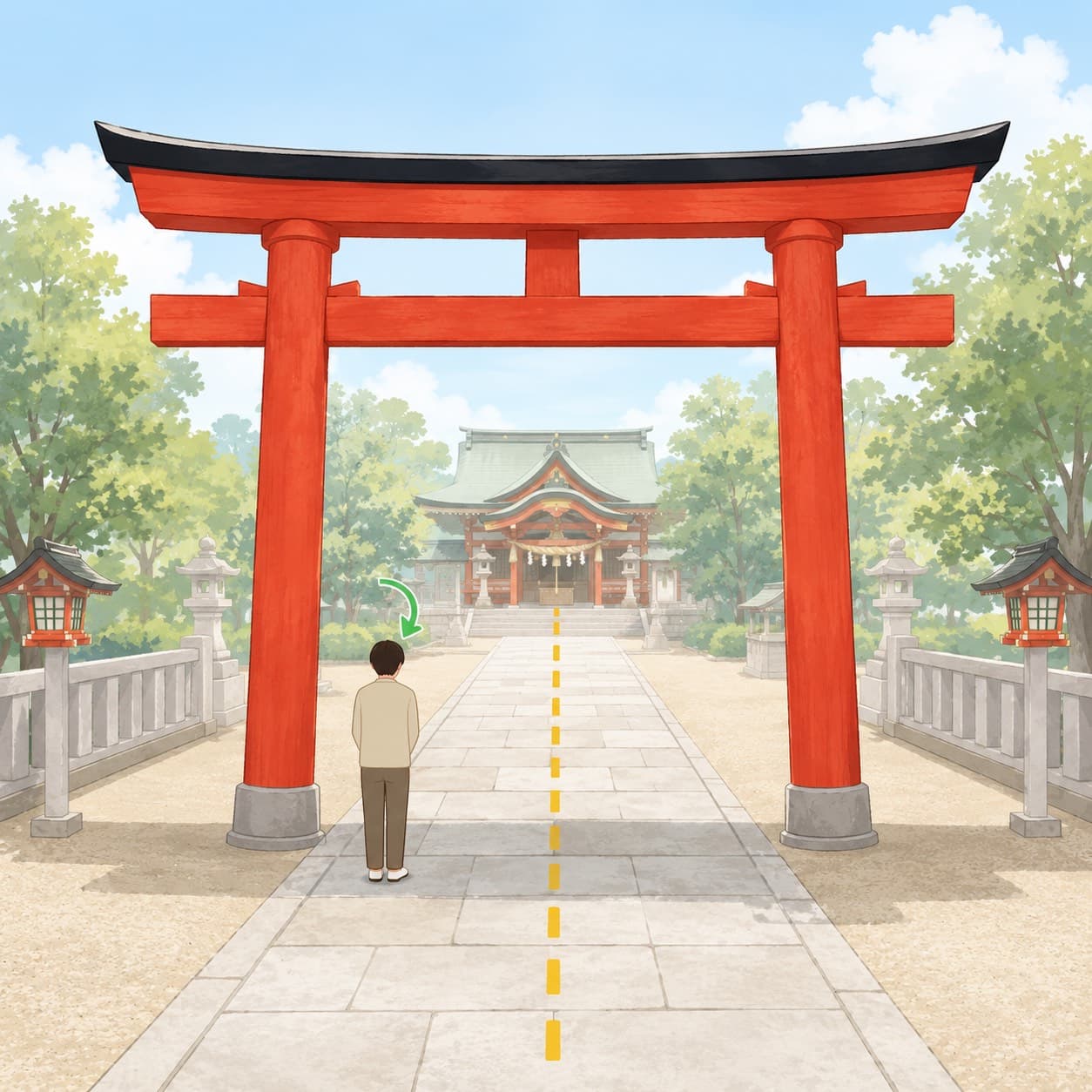
Bow once before passing through the torii gate, keeping to one side rather than the center

The torii gate (a traditional gateway) marks the boundary between the sacred grounds and the ordinary world. Bow once before passing through.

  • The center of the gate is the path of the kami (seichu), so keep to the left or right side as you walk
  • It's best to remove hats and sunglasses
  • On your way out, turn back toward the torii and bow once more after passing through

2Walking the Approach (Sando)

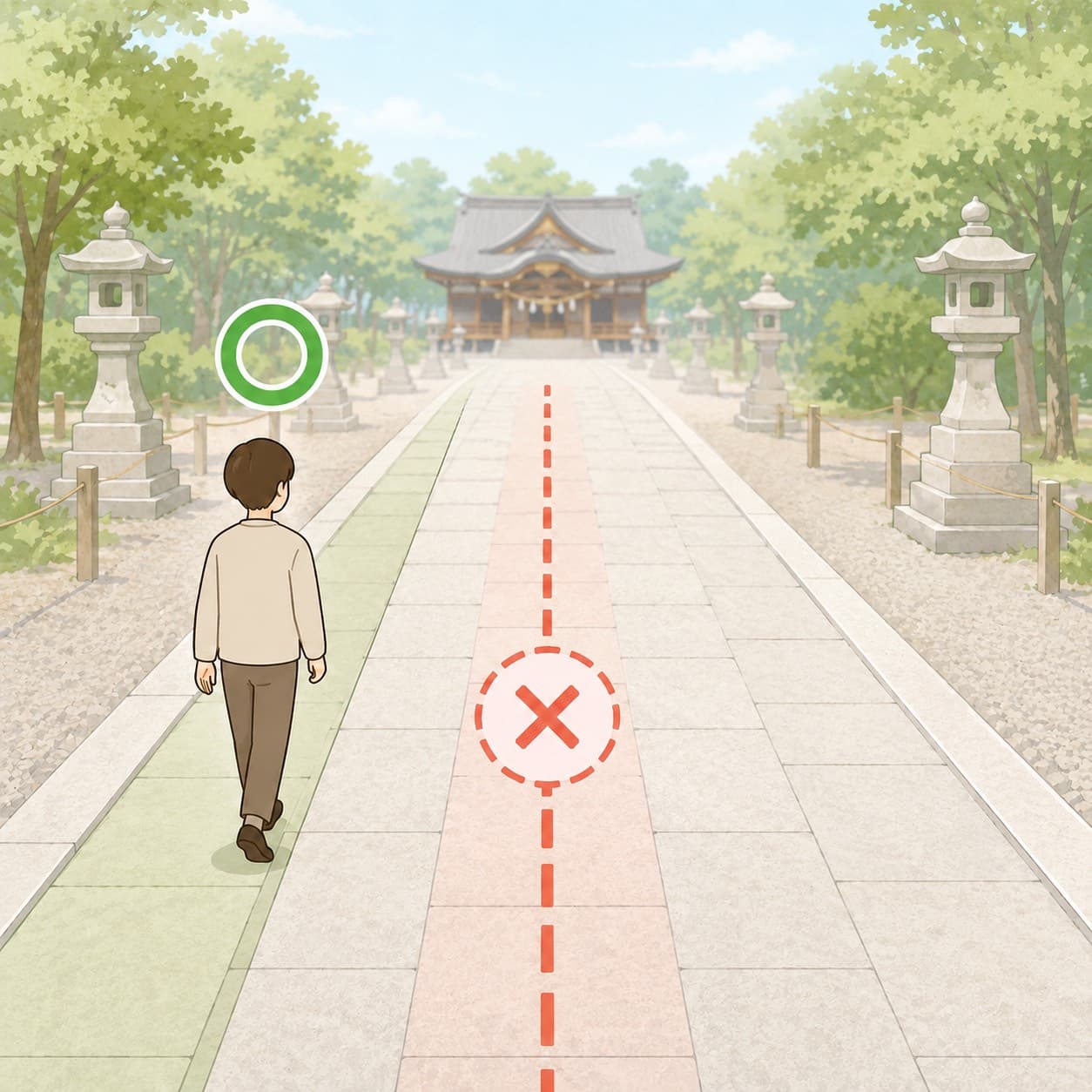
Walk along the edge of the sando approach, avoiding the center (seichu)

Just as at the torii gate, walk along the edge of the sando (approach), avoiding the center.

  • Walk quietly, with a calm mind
  • Avoid rushing or speaking loudly

3Purifying Yourself at the Temizuya

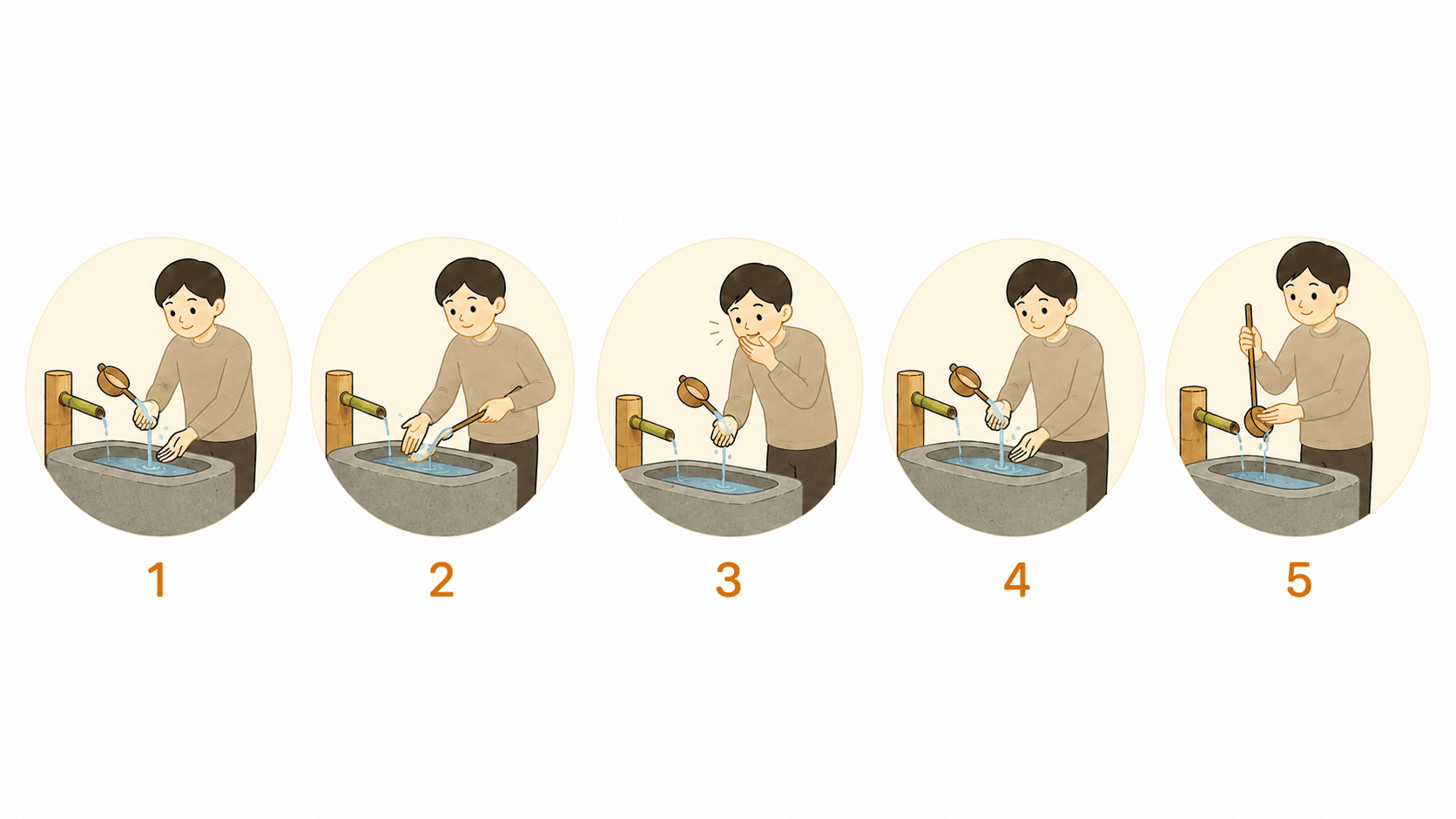
Before worshiping, purify your hands and mouth at the temizuya (purification fountain). Follow the steps below.

The five steps of temizu purification
  1. Hold the ladle (hishaku) with your right hand, scoop water, and rinse your left hand
  2. Switch the ladle to your left hand and rinse your right hand
  3. Switch back to your right hand, pour water into your cupped left hand, and rinse your mouth with it (never touch the ladle directly to your lips)
  4. Rinse your left hand once more
  5. Tip the ladle upright so the remaining water runs down the handle to rinse it, then return it to its place

4Worship Ritual at the Hall of Worship (Haiden)

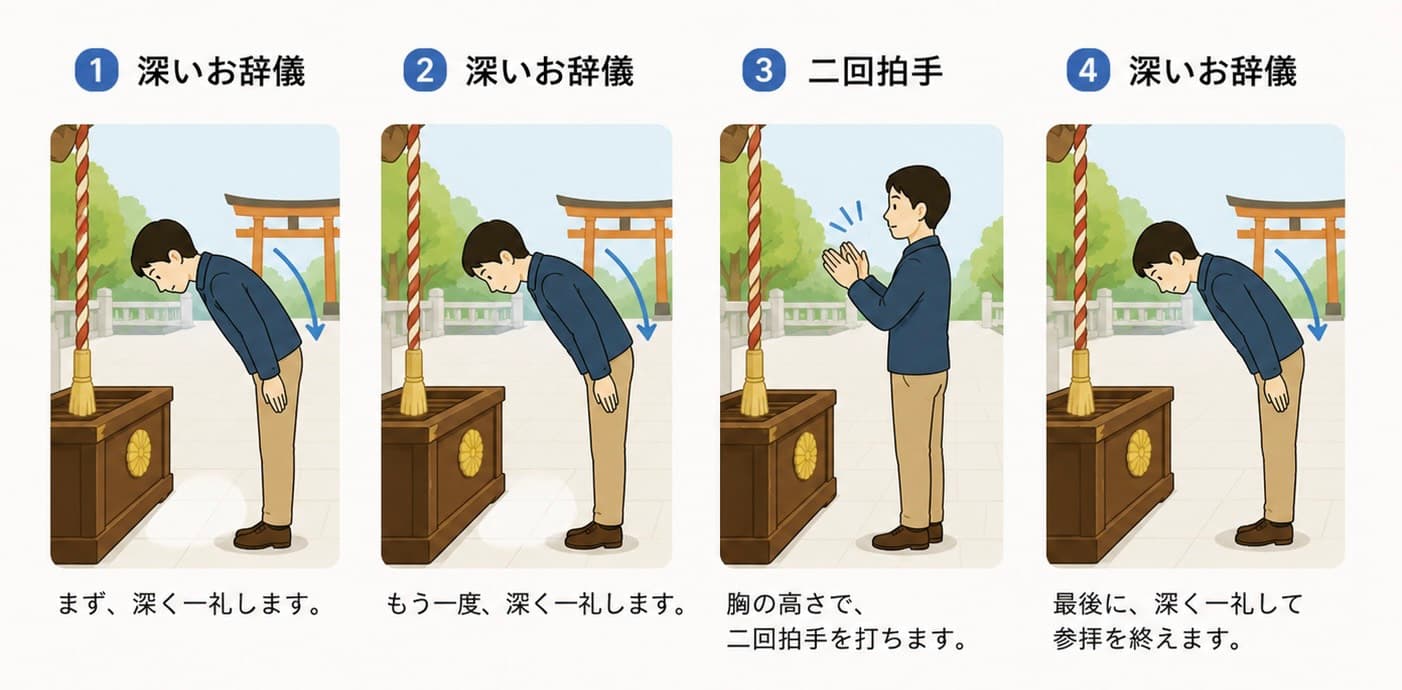
Nihai Nihakushu Ippai (two bows, two claps, one bow)

The nihai nihakushu ippai ritual: two deep bows, two claps, then one deep bow
  1. Quietly place your offering (saisen) in the offering box — don't toss it in
  2. If there's a bell, ring it — this lets the kami know you're there
  3. Nihai (two bows): Bow deeply, twice, at about a 90-degree angle
  4. Nihakushu (two claps): Clap twice in front of your chest — shifting your right hand slightly lower than your left produces a clearer sound
  5. Keep your hands together and silently offer your prayer
  6. Ippai (one bow): Finish with one more deep bow

â€ģ The ritual can vary by shrine — for example, Izumo Taisha uses "two bows, four claps, one bow," and Ise Jingu uses "eight bows, eight claps."

5Praying Before the Kami

It's natural to wonder how to address the kami once you're standing before them. Hidden within these old prayer customs are some wonderful ways of thinking that can turn your outlook more positive.

Turn a "Request to the Gods" Into a "Vow"

Rather than asking "please make this happen," it's better to report to the kami: "here's what I'm going to work hard at from now on!"

Putting your own resolve into words before the kami sharpens your focus, and — quite naturally — your actions start shifting in a more positive direction too. This kind of pledge to yourself is the first step toward making a wish come true.

Start With a Self-Introduction

Take a deep breath to steady your mind, then politely tell the kami, in your heart, your name and where you live.

Making it clear exactly who you are and where you're from helps deepen and strengthen your connection with the kami.

Take the "Ga" Out of "Kagami" (Mirror)...

The mirror (kagami) enshrined in the hall of worship reflects exactly who you are right now.

In Japanese, the word for mirror, kagami (かがãŋ), contains the syllable ga (が) — meaning ego, selfishness, or desire. Gently set that "ga" aside, and what's left is kami (かãŋ) — the word for "god."

Letting go of unnecessary attachments and looking at yourself with an honest heart — that may be the shortest path to connecting with the kami.

6Other Etiquette

  • Dress: Wear clean, tidy clothing. Avoid revealing outfits
  • Photography: Some areas prohibit photos. Check before taking any
  • Goshuin: It's proper etiquette to receive your Goshuin (shrine stamp) after worshiping
  • Eating & drinking: Avoid it on the grounds, except in areas where it's permitted
  • Pets: Some shrines do not allow pets

Temple worship etiquette differs from that of shrines.

See temple worship etiquette →