Power Spots
From shrines and temples to nature and sacred sites — a curated guide to Japan's most notable power spots.
Akiyoshi-do (Akiyoshi Cave)
One of Japan's leading limestone caves with a total length of 10 kilometers. It is a Special Natural Monument featuring the breathtaking Hyakumaizara (Hundred Plate) and Ogonbashira (Golden Pillar).
Akama-jingu (Akama Grand Shrine)
A shrine located at the Kanmon Straits, the site of the downfall of the Taira clan, enshrining Emperor Antoku who entered the waters of Dan-no-ura.
Kibitsu Jinja (Kibitsu Shrine)
The model for the Momotaro legend. This site is the first shrine of the Bitchu Province, featuring a beautiful main hall (honden) built in the National Treasure-designated Hiyoku-irimoya style.
Kanba no Taki (Kanba Falls)
A tiered waterfall with a 110-meter drop, one of the largest in Western Japan. It is renowned for its autumn foliage and wild Japanese macaques.
Daigo Sakura (Daigo Cherry Tree)
A famous single cherry tree estimated to be approximately 1,000 years old, which was admired by Emperor Go-Daigo.
Izumo Taisha (Izumo Grand Shrine)
A representative power spot in Japan for matchmaking, enshrining the deity of destiny.
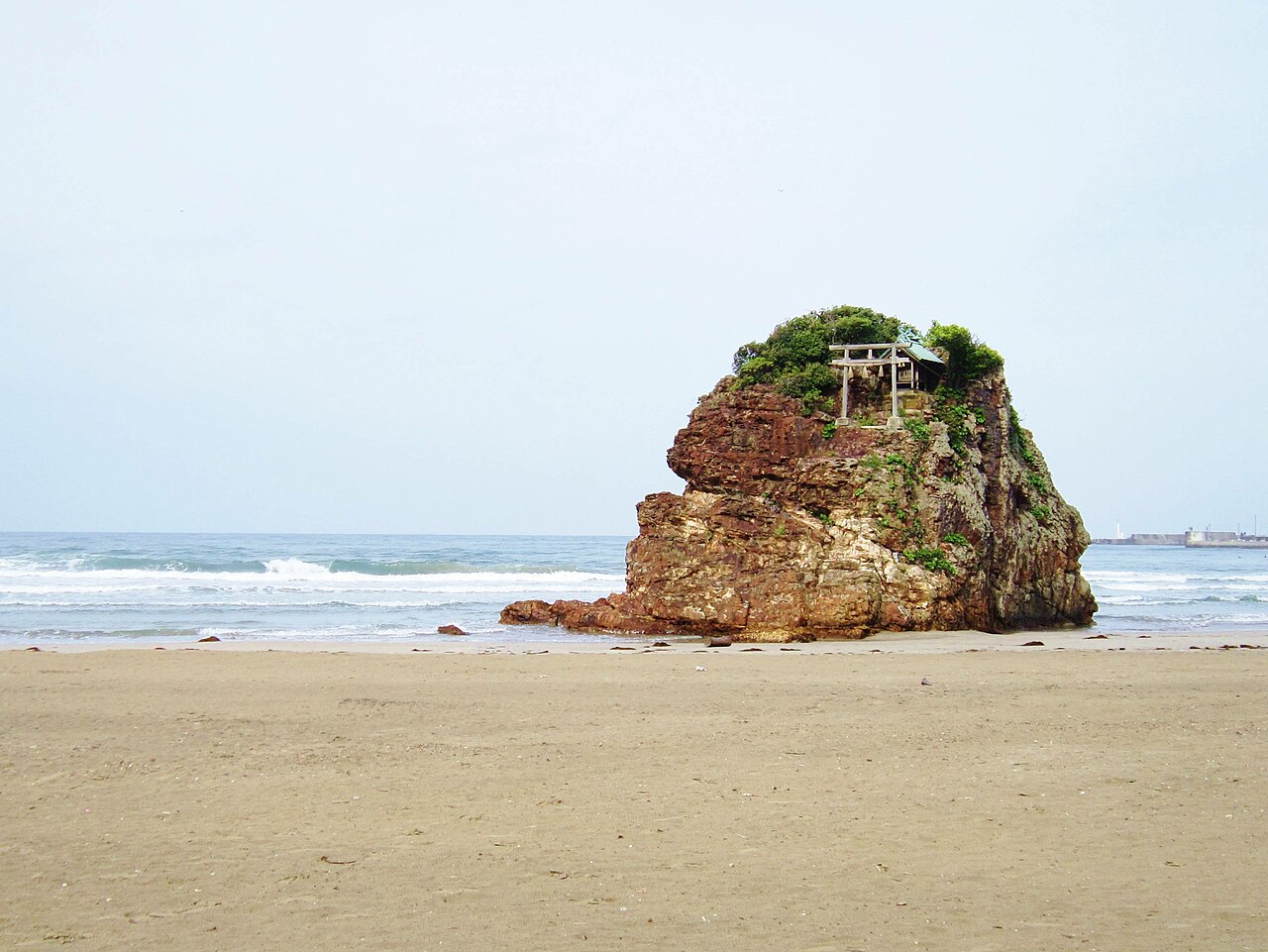
Inasa-no-Hama (Inasa Beach)
The setting of the Kuniyuzuri (Land Transfer) myth. This is a beach where the myriad deities of Japan descend during the Kamiarizuki (Month of the Gods).
Itsukushima Jinja (Itsukushima Shrine)
A World Heritage site and sea shrine famous for its grand torii gate standing in the ocean.
Oasahiko Jinja (Oasahiko Shrine)
The first of the Awa Province shrines (Awa no Ichinomiya). This ancient shrine is renowned for its sacred tree (mikimi) over a thousand years old and the German Bridge.
Oyamazumi Jinja (Oyamazumi Shrine)
The head shrine of the national Yamazumi and Mishima shrines. It is known as the Iyo Province Ichinomiya (the first of the three most important shrines in Iyo Province) and is referred to as the "Nihon So-chinju" (the General Guardian of Japan).
Ishizuchi-san (Mount Ishizuchi)
Standing at an altitude of 1,982 meters, it is the highest peak in Western Japan and a sacred mountain (reizan) associated with the figures En no Gyoja and Kukai.
Kotohira-gu (Kotohira-san)
Known affectionately as "Kotohira-san," this shrine is nestled on the slopes of Zoto-san. It serves as the guardian deity of the sea, situated at the end of 785 stone steps.
Tosa Jinja (Tosa Shrine)
The first of the Tosa Province shrines (Tosa-no-Kuni Ichinomiya). This is an ancient shrine featuring a beautiful main hall (honden) built in the unique 'Iritonbo-gata' (dragonfly-wing) style by Chosokabe Motochika.
Sugi no Osugi (Great Cedar)
A Special Natural Monument estimated to be 3,000 years old. It is a massive twin-trunked cedar tree hailed as the largest cedar in Japan.
Daisen (Mount Daisen)
Standing at 1,729 meters, it is the highest peak in the Chugoku region. Since ancient times, it has served as a sacred mountain (reizan) and the center of Daisen faith.
Hakuto Jinja (Hakuto Shrine)
The setting of the "Inaba no Shirousagi" (White Rabbit of Inaba) myth. It is considered the birthplace of Japan's oldest love story and the origin of medical practice.
Coverage is expanding gradually starting with major power spots. Please check official sources before visiting, as details may change.